Best battle royale games for beginners usually share the same DNA: forgiving early fights, clear objectives, and matchmaking that doesn’t punish you for learning in public. If your first BR experiences have been “land, panic, die, repeat,” you’re not alone, and it’s not necessarily a skill issue.
What trips most new players isn’t gun skill, it’s decision-making under noise: where to drop, when to rotate, what loot matters, and how to survive third parties. The right game smooths that learning curve with better onboarding, clearer audio/visual cues, and modes that let you practice without feeling like target practice.
This guide focuses on beginner-friendly choices you can actually stick with, plus practical steps to get past the “instant elimination” phase. I’ll also call out common traps, like copying high-level streamer settings before you understand why they work.
What makes a battle royale “beginner-friendly” (and what doesn’t)
Not every BR is hard in the same way. Some punish you with complex movement, others with harsh time-to-kill, and others with high information load. For new players, “friendly” tends to mean you get more learning reps per hour.
- Time-to-kill (TTK): A slightly longer TTK can give you time to react, heal, and reposition instead of instantly losing the fight.
- Clear loot rules: Fewer ammo types and simpler attachments reduce “inventory paralysis.”
- Good onboarding: Tutorials, firing ranges, bot matches, and challenges that teach fundamentals.
- Matchmaking and modes: Ranked separation, casual playlists, and respawn mechanics matter a lot early on.
- Strong audio/visual readability: You want to understand what’s happening when you get shot, not guess.
Also worth saying out loud: “beginner-friendly” doesn’t mean “easy forever.” It means the game gives you room to improve without feeling punished for not knowing the meta yet.
Quick picks: the best battle royale games for beginners (with reasons)
If you just want a solid place to start, these are commonly the least frustrating entry points, depending on what kind of player you are.
Fortnite (Zero Build is the on-ramp most beginners actually need)
Fortnite can look intimidating because of building, but Zero Build changes the experience completely. You can focus on positioning, cover, and aim without learning advanced edit mechanics on day one.
- Why it works: straightforward weapons, lots of cover tools, and a huge player base so matchmaking tends to be healthy.
- Best for: players who like colorful visuals, frequent updates, and a lighter vibe.
- Watch out for: fast third parties and “mobility items” that can turn a calm fight into chaos quickly.
Apex Legends (great tools to learn, but movement skill rises fast)
Apex gives you a firing range, strong ping system, and legends that teach roles. The trade-off is that movement and team coordination can spike in difficulty once you leave the early lobbies.
- Why it works: respawn banners, clear squad roles, and lots of practice options.
- Best for: players who like tactical teamplay and learning “fight flow.”
- Watch out for: being separated from your team, this game punishes solo wandering.
Call of Duty: Warzone (familiar gunplay, but can feel fast and loud)
Warzone is approachable if you already know Call of Duty recoil and pacing. It often feels intense, though, because information comes at you nonstop.
- Why it works: strong gunfeel, straightforward looting compared to some BRs, and multiple modes depending on the season.
- Best for: FPS players who want a modern military vibe and quick fights.
- Watch out for: audio clutter and aggressive pushes, which can overwhelm brand-new BR players.
PUBG: Battlegrounds (slower, more tactical, not always forgiving)
PUBG often rewards patience and positioning, which can be a relief if you dislike constant movement tech. At the same time, it can be punishing because mistakes are harder to “undo.”
- Why it works: clear stakes, strong tension, and a pace that teaches rotations.
- Best for: players who like realistic gun handling and methodical play.
- Watch out for: harsher firefights if you’re still learning recoil control.
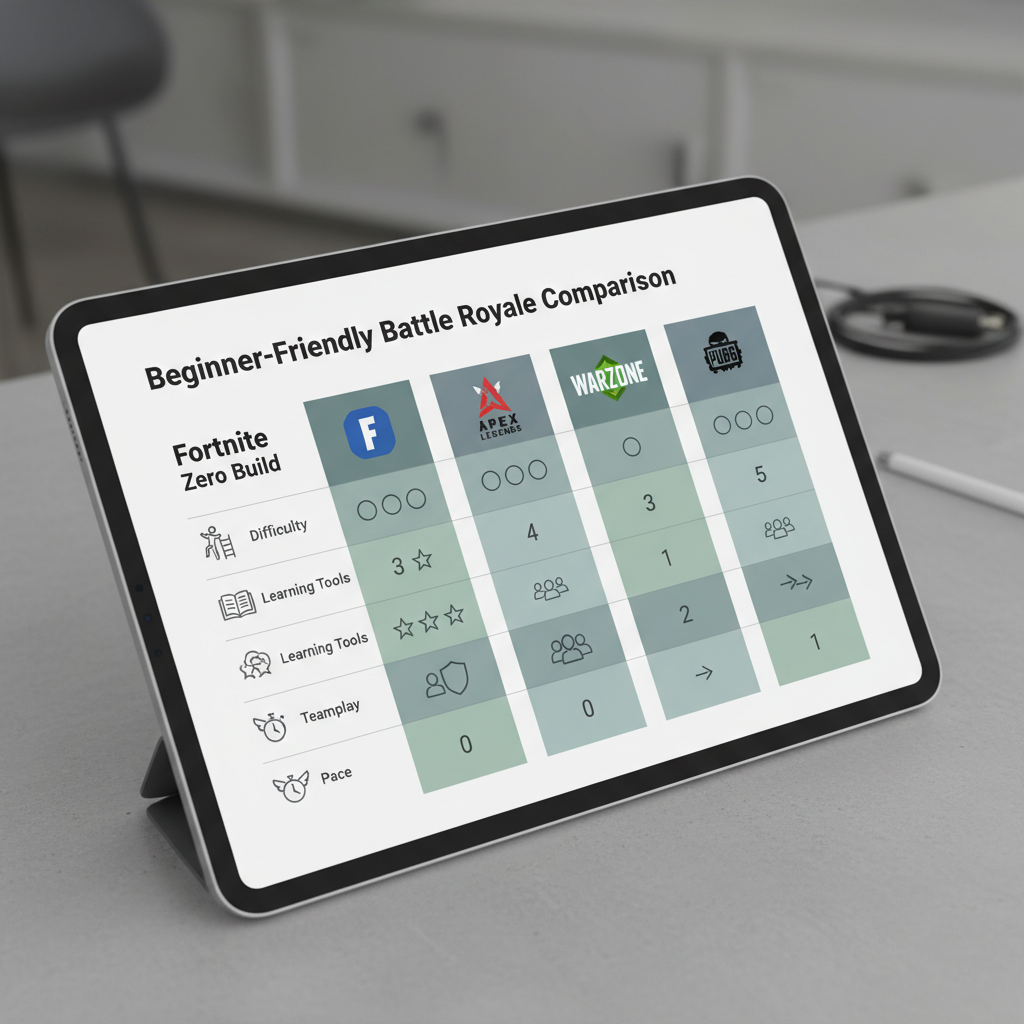
Beginner comparison table: pick based on how you like to learn
Here’s a practical way to choose without overthinking it. Use this as a starting point, not a forever label.
| Game | Best “first mode” | Learning curve feel | Why beginners stick with it |
|---|---|---|---|
| Fortnite | Zero Build | Easy start, high ceiling | Clear goals, forgiving tools, lots of variety |
| Apex Legends | Trios/Duos + Firing Range | Medium start, ramps fast | Best-in-class ping, strong practice options |
| Warzone | Respawn-friendly playlists (when available) | Medium-hard, very fast | Familiar FPS gunplay and pacing for COD fans |
| PUBG | Casual/Training (if available) | Harder early, tactical | Teaches positioning and rotations naturally |
Self-check: which beginner profile are you?
Before you download three games and bounce off all of them, do a quick gut-check. Most beginners fit one of these patterns.
- “I hate dying instantly.” Choose longer TTK and modes with cover tools, Fortnite Zero Build often feels calmer than it looks.
- “I get lost and don’t know what to do next.” Pick games with strong pings/objectives and readable maps, Apex helps here.
- “My aim is fine, I just want clean gunfights.” Warzone can click fast if you like COD gunfeel.
- “I prefer slow and smart.” PUBG might suit you, as long as you accept harsher punishment for mistakes.
- “I mostly play with friends.” Prioritize team tools and respawn options, you’ll learn faster with less frustration.
According to ESRB, game ratings include content and age guidance for players in the U.S., if you’re choosing something for a younger new player, check the rating and descriptors before you commit.
Practical starter plan: your first 10 matches without the burnout
This is the part most guides skip, the “what do I actually do tonight” part. The goal is not wins, it’s reducing chaos so you can see what you did wrong.
Match 1–3: land safe, learn loot, leave early
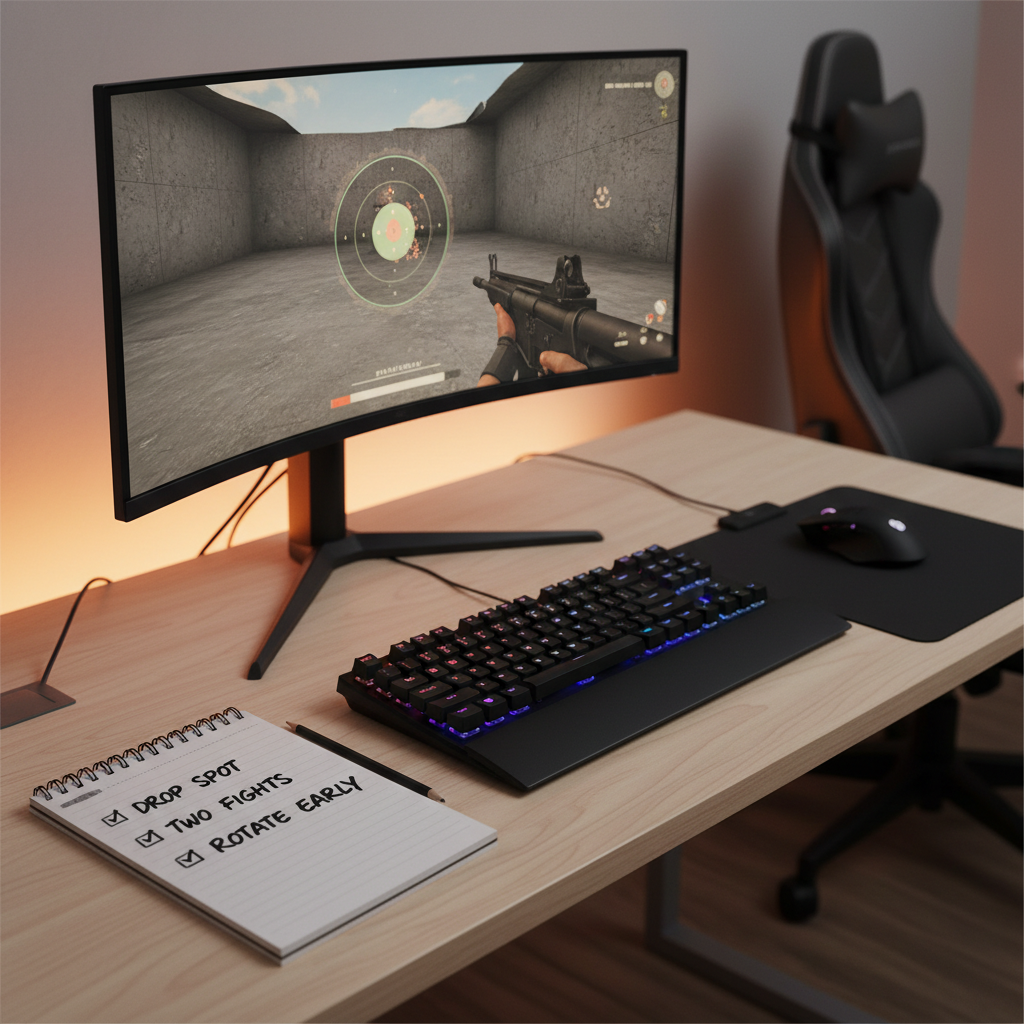
- Pick a quieter drop spot near the edge, not the hottest named location.
- Loot until you have: a close-range option, a mid-range option, healing, and at least one mobility/utility item if the game supports it.
- Rotate early toward the next safe area, you’re practicing movement decisions, not chasing kills.
Match 4–7: take two fights on purpose
- Choose fights where you see the enemy first, if you’re getting shot in the back you’re not learning gunfights yet.
- After each fight, ask one question: Did I lose because of aim, position, or timing?
- If you win, reset fast: reload, heal, reposition. The next team often arrives quickly.
Match 8–10: practice endgame habits
- Stop sprinting everywhere, move cover-to-cover and hold angles.
- Take high ground when possible, but don’t “ego peek” the same angle twice.
- Carry more healing than you think, new players often die with empty meds.
Settings and habits that help beginners more than “meta loadouts”
Chasing the current “best gun” matters less than making your controls predictable. If you feel inconsistent, it’s often a setup problem before it’s a talent problem.
- Lower your sensitivity a bit if you over-flick past targets, consistency beats speed early.
- Turn on visual audio cues when the game offers it, it can reduce confusion in close fights.
- Prioritize a stable frame rate over ultra graphics, visual clarity wins more fights than fancy shadows.
- Use push-to-talk or clean comms with friends, chaotic callouts can be worse than silence.
According to FTC, players should be cautious with in-game purchases and understand what they’re buying, especially in free-to-play titles where cosmetics and bundles can add up quickly.
Common mistakes that keep beginners stuck
These are the patterns that make people quit BRs. The fix is usually simple, but it takes a little honesty.
- Hot dropping every match because it feels “efficient,” you learn panic, not fundamentals.
- Looting forever to avoid fights, you reach endgame underprepared and get deleted anyway.
- Taking fair fights (50/50), beginners improve faster by stacking advantages, better angle, better cover, better timing.
- Standing still to shoot, you don’t need fancy movement, just strafe and use cover discipline.
- Blaming matchmaking for everything, sometimes it’s true, but often your drop choice and rotations decide your survival time.
When to ask for help (and what “help” should look like)
If you’ve played 20–30 matches and still feel lost, getting input can save time. The best help is specific and low-ego, not someone yelling “you’re throwing.”
- Ask a friend to watch one full match and comment only on positioning and rotations, not aim.
- Record a short clip and review the moment you got knocked, look for the first mistake, not the last shot.
- If you’re getting frustrated to the point it affects your mood, take a break, competitive games can amplify stress for some people, and that’s a normal human response.
According to Common Sense Media, families often benefit from setting time and spending boundaries around games, if you’re helping a younger beginner, that structure can prevent arguments later.
Key takeaways (so you can pick and start today)
- Fortnite Zero Build is a strong default for new players who want fewer mechanical barriers.
- Apex Legends teaches teamwork and decision-making well, but movement skill ramps as you improve.
- Warzone clicks fastest for COD players, though the pace can overwhelm total newcomers.
- PUBG rewards slower, smarter play, but early mistakes cost more.
- Your first goal is consistency, not wins, land safer, rotate earlier, take planned fights.
Conclusion: choose the BR that fits your learning style, not your pride
The “right” pick among the best battle royale games for beginners is the one that gives you enough breathing room to notice patterns, then try again without feeling embarrassed. Start with one game, commit to ten focused matches, and track just one improvement point at a time, better drops, cleaner rotations, calmer fights.
If you want a simple action step, download one title that matches your profile, pick a safe drop route you can repeat, and play three matches where survival and positioning matter more than kills, you’ll be surprised how quickly the game feels less random.
FAQ
What are the best battle royale games for beginners if I’m playing solo?
Fortnite Zero Build is often the least punishing solo start because you can play around cover tools and avoid complex team synergy. Apex can be rough solo unless you commit to sticking with your squad and using pings constantly.
Which beginner-friendly BR has the easiest looting system?
Fortnite tends to feel straightforward, fewer attachment decisions and a clearer “grab this and go” loop. Warzone can also feel simple if you like COD-style weapons, though the overall pace is higher.
Is Apex Legends too hard for new players?
Not necessarily, but it rewards team cohesion and positioning quickly. If you use the firing range, play with one legend for a while, and avoid wandering alone, the learning curve becomes manageable.
How do I stop dying right after landing?
Choose a repeatable, quieter drop spot, loot only until you’re functional, then rotate early. Many beginners die because they land hot without a plan, or they loot slowly while nearby teams finish fights and push.
Should beginners play ranked mode?
It depends on the game and current season, but ranked can sometimes feel more structured than casual. If ranked stresses you out, stick to casual until you understand rotations and basic fight timing.
Do I need to copy pro settings to improve?
No, pros optimize for their habits and hardware. Beginners usually improve faster by stabilizing frame rate, picking a comfortable sensitivity, and keeping controls consistent across sessions.
What’s a realistic first goal in battle royale?
A good first target is reaching the final 25% of the lobby more consistently while taking at least one planned fight per match. That balance teaches survival and combat without turning every game into a hide-and-seek session.
One last nudge (if you want a smoother start)
If you’re trying to find the best battle royale games for beginners because you’re tired of feeling behind, consider playing with one friend who agrees to keep comms simple and focus on repeatable routines, same drop, same roles, quick post-fight reset, it’s a much calmer way to learn than bouncing between random squads and random strategies.