
best vr robot games 2026 is a search that usually means one thing: you want robot-heavy VR that feels good to play, runs well on your headset, and doesn’t end up as a refund after 20 minutes.
Robot VR is a funny niche, it can mean cockpit simulators, co-op shooters with drones, mech brawlers, or puzzle worlds where you are the machine. The “best” choice changes fast because patches, platform ports, and comfort options matter as much as the concept.
This guide stays practical: what to play in 2026, how to pick based on your headset, your motion comfort, and what “robot game” really means in VR. I’ll also call out common traps, like buying a PCVR-only title for a standalone headset.
What counts as a “robot game” in VR (and why it matters)
People land on best vr robot games 2026 with different expectations, so it helps to define the buckets, because each one plays differently in VR.
- Mech cockpit sims: seated play, instrument panels, heavy “pilot” fantasy, often more comfortable for motion-sensitive players.
- Robot shooters: waves of bots, tactical cover, physics-based reloading, strong replay value if the AI and gunfeel hold up.
- Robot brawlers: melee arms, punching systems, often higher exertion and higher risk of controller-smack moments.
- Robot puzzle/adventure: slower pace, object interaction, great if you want immersion without intense locomotion.
- Co-op with drones/companions: you’re human, but your “robot” is your toolkit, these can be the most social.
Key point: comfort settings and locomotion style are not “nice to have” in 2026, they’re often the difference between loving a game and never touching it again.
Quick comparison table (pick a lane fast)
If you want a fast shortlist without reading every paragraph, use this table to narrow what to try first. I’m focusing on gameplay style and buying considerations rather than pretending any single list fits everyone.
| Robot VR style | Best for | Typical comfort level | What to watch before buying |
|---|---|---|---|
| Mech cockpit sim | Seated players, “pilot” immersion | Often easier | HOTAS support, readability, performance on your GPU |
| Robot wave shooter | Replay value, skill progression | Varies | Locomotion options, reload style, haptics feel |
| Robot brawler | Workout gameplay, punching fantasy | Usually medium | Playspace needs, tracking quality, wrist strain risk |
| Robot puzzle/adventure | Story, atmosphere, low stress | Often easiest | Interaction depth, length, save system |
| Co-op robot tactics | Friends, teamwork | Varies | Matchmaking health, cross-play, voice features |
Best VR robot games 2026: what to look for (the stuff reviews skip)
Instead of naming only “top 10” titles that may change month to month, here’s the real checklist that separates great robot VR from shiny demos.
1) Robot presence: weight, scale, and feedback
Robots feel believable when the game nails scale (a mech should feel massive), audio (servo whine and impact), and haptics (even basic controller vibration cues). When those cues are weak, combat feels floaty and puzzles feel like grabbing cardboard.
2) Interaction model that fits VR
In 2026, “VR support” should mean more than head tracking. Better robot games let you physically route cables, swap toolheads, slam a cockpit canopy, or manipulate parts with clear affordances. When interaction is just point-and-click in 3D space, immersion drops fast.
3) Comfort options aren’t optional
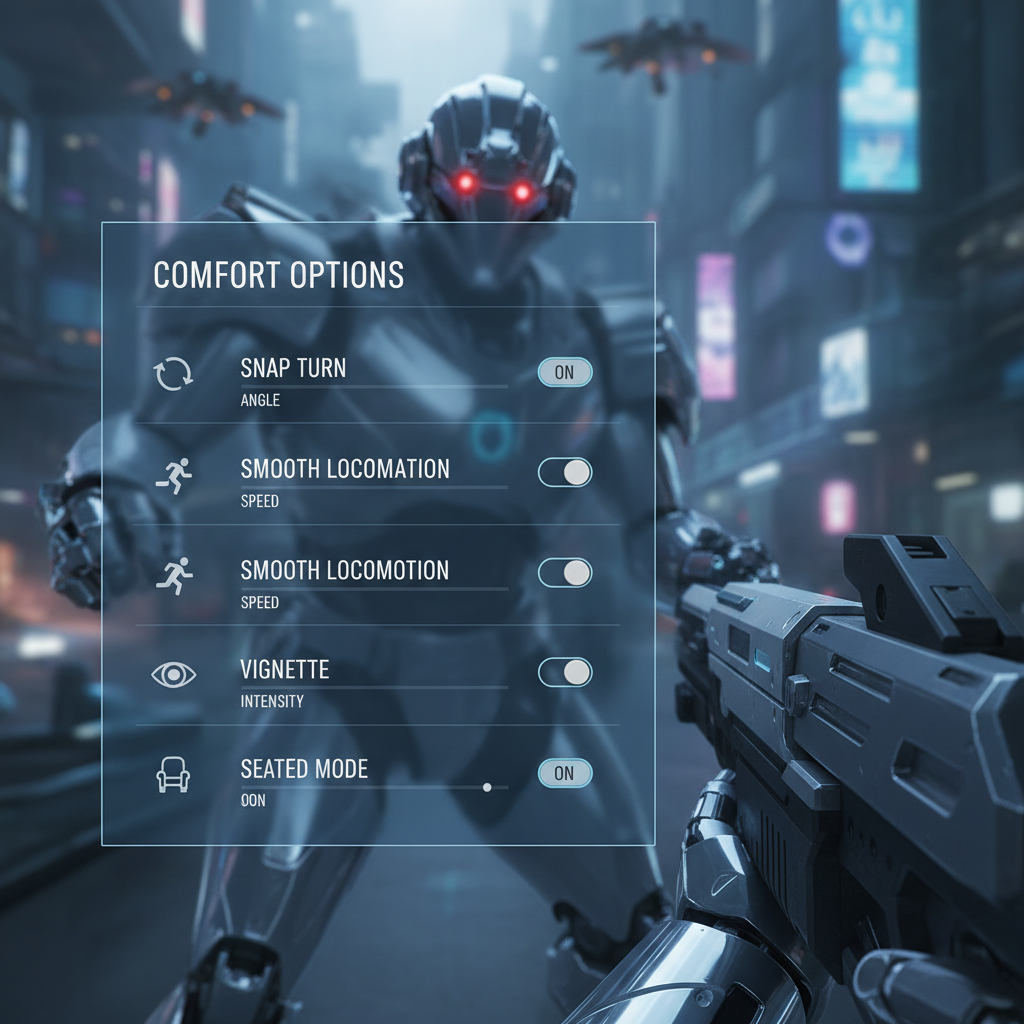
Look for snap turning, vignetting, seated mode, teleport alternatives, and speed sliders. According to Meta (Quest platform guidelines and comfort ratings), offering multiple locomotion options is a common best practice to reduce discomfort for a broader audience.
4) Performance headroom
Robots often mean lots of moving parts, particle effects, and physics. If a game is barely stable at launch settings, you’ll see reprojection artifacts, dropped frames, and motion discomfort. For PCVR, check whether the developer targets your headset’s refresh rate (90/120Hz, etc.) and whether DLSS/FSR options exist where relevant.
Self-check: which robot VR game fits you?
Use this quick self-check before you buy, because “best vr robot games 2026” isn’t a single answer, it’s a match problem.
- I get motion sick easily → prioritize cockpit sims and puzzle/adventure robot games, avoid forced smooth locomotion.
- I only play standalone → verify it’s native to your headset store, don’t assume a PCVR title will feel the same via streaming.
- I want long-term progression → look for roguelite loops, challenge modes, or co-op endgame rather than pure story.
- I play in a small room → avoid brawlers that demand wide swings, favor seated or minimal-playspace designs.
- I’m here for co-op → check population, cross-play, and whether missions scale for 2 players or need a full squad.
Small reality check: the most cinematic robot game is not always the best “daily driver” VR game, comfort and repeatability win in the long run.
Buying and setup tips that save you time (and refunds)
This is the part most lists skip. A few minutes of prep usually makes robot VR feel dramatically better.
Confirm platform and tracking expectations
- Standalone vs PCVR: if you’re on Quest/standalone, confirm it’s not “PCVR only” unless you already use Link/Air Link/Steam Link.
- Controller layout: robot games with lots of bindings can feel cramped, check if the game supports remapping.
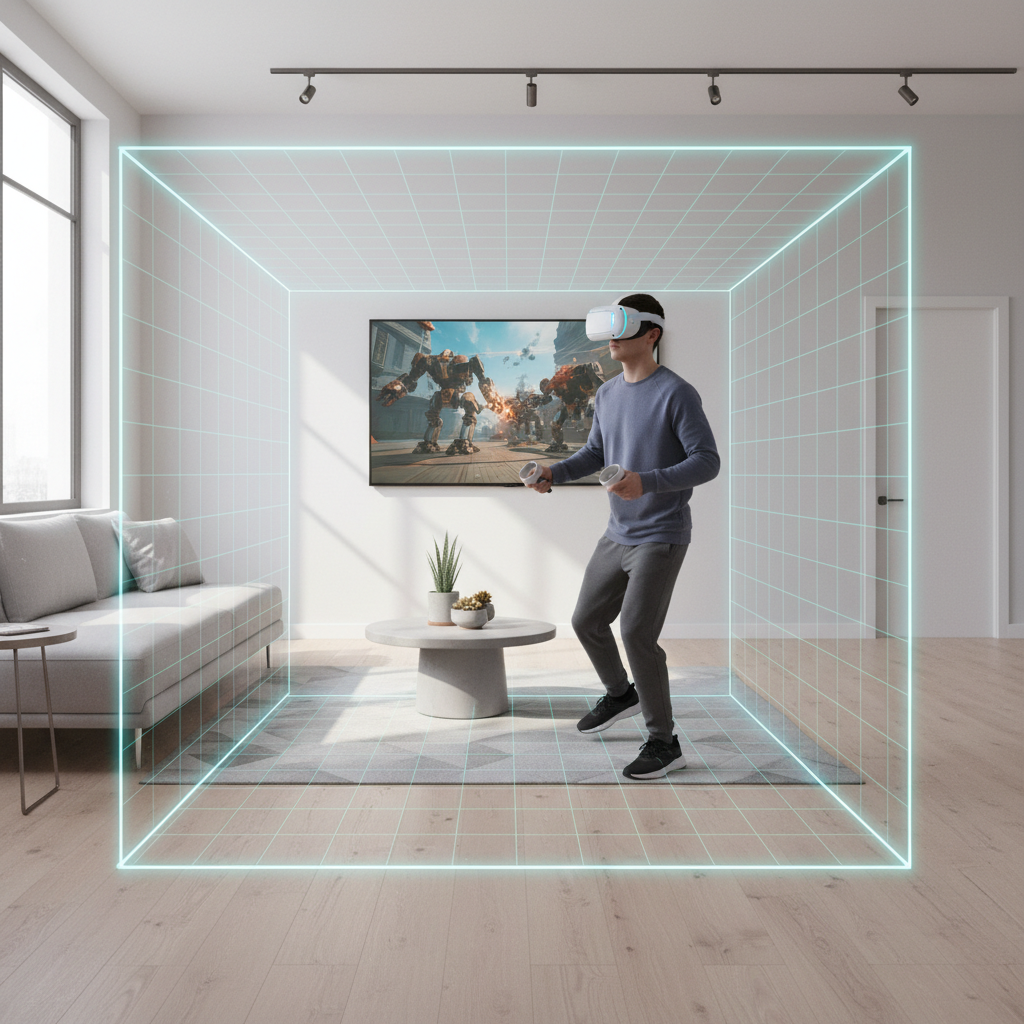
- Roomscale needs: brawlers and “arm-cannon” shooters often work best with a larger boundary.
Dial in comfort settings before you judge the game
- Start with snap turning and moderate movement speed, then relax settings as you adapt.
- If you sweat or get warm, take breaks, dehydration and heat can make nausea worse.
- If you have a medical condition affected by motion or exertion, it’s sensible to ask a healthcare professional what’s safe for you.
According to CDC, taking breaks and listening to your body during physically active play is a reasonable general safety approach, especially if you feel dizzy or unwell.
Common mistakes people make with robot VR (easy to avoid)
I see the same issues behind “this game is broken” reviews, and a lot of them are really mismatch problems.
- Buying for the fantasy, not the loop: a gorgeous mech cockpit can still be dull if missions repeat with no new decisions.
- Ignoring comfort ratings: if a store flags it as intense and you’re sensitive, assume you’ll need to tweak settings or pick another style.
- Expecting perfect physics: robot dismemberment and full interaction are expensive to simulate, many games fake it smartly.
- Overlooking audio: robot games live on sound, weak audio design makes combat feel soft even with good visuals.
- Forcing long sessions: especially early on, shorter sessions tend to build tolerance better than “powering through.”
How to build your “best VR robot games 2026” shortlist (a simple method)
If you want a repeatable way to choose, score each candidate game with these criteria and pick the highest match, not the loudest trailer.
- Platform fit: runs natively where you play most.
- Comfort fit: locomotion options match your tolerance.
- Core loop: story, roguelite, PvE grind, co-op missions, pick what you’ll actually replay.
- Robot fantasy: cockpit immersion, companion bots, industrial vibes, or pure combat spectacle.
- Longevity signals: active patch notes, clear roadmap language, mod support on PC where applicable.
Practical move: shortlist 3 games max, buy one, play for 45–60 minutes across two sessions, then decide if it earns a spot before grabbing the next.
Conclusion: the best pick is the one you’ll keep playing
The best vr robot games 2026 aren’t just the newest releases, they’re the ones that match your hardware, your comfort level, and the kind of robot fantasy you actually want week after week. Start by choosing a style, check comfort and platform fit, then use the shortlist method so you don’t end up with a library of impressive trailers you never touch.
If you want one action today, pick your category, cockpit sim, shooter, brawler, puzzle, or co-op, and compare candidates using the table above before you buy.
FAQ
What are the best VR robot games 2026 for Quest without a PC?
Look for native Quest store robot titles and prioritize comfort options, especially if you’re newer to smooth movement. If a game description emphasizes high-end graphics or “PCVR recommended,” treat that as a warning sign for standalone performance.
Are mech cockpit games better for motion sickness?
Often, yes, seated cockpit play can feel more stable because your brain gets a “fixed frame” reference. It still varies by game, so check whether it supports snap turning and adjustable camera behavior.
How do I know if a robot VR game is too intense for me?
Store comfort ratings help, but also scan gameplay clips for fast strafing, smooth turning, and lots of vertical movement. If you’re unsure, buy from a store with a clear refund policy and test in short sessions.
Do robot VR games need lots of space?
Not always, cockpit sims and many shooters work fine standing in place or seated. Brawlers and roomscale-heavy melee games tend to need more clearance to avoid punching walls or lamps.
Is PCVR worth it for robot games in 2026?
Many PCVR robot games can offer richer visuals, larger battle scenes, and mod options, but only if your setup runs smoothly. If you’re sensitive to stutter, stable performance matters more than ultra settings.
What features should I prioritize for co-op robot VR?
Cross-play, reliable matchmaking, and missions that scale for smaller groups usually matter more than raw content count. If you play with the same friends, private lobbies and quick rejoin features are a quiet quality-of-life win.
Can VR robot brawlers be a good workout?
They can be, but intensity varies and form matters, especially for wrists and shoulders. If you feel pain, it’s smart to stop and adjust your play style, and consider professional advice if issues persist.
If you’re trying to narrow down best vr robot games 2026 to a couple of “safe buys,” a curated shortlist by headset and comfort preference can save time, especially if you’d rather play than research store pages and patch notes all night.