
Best food recipes in survival games usually come down to the same trade: spend a bit more prep time now to avoid bigger problems later, like slow healing, stamina crashes, and constant detours for ingredients. If you feel like you’re always hungry even when you “have food,” you’re probably eating the wrong tier of meals for your current stage.
Food systems in survival games look different on the surface, but the pressure points rhyme: limited inventory, spoil timers, cold or heat debuffs, and combat that punishes low stamina. The good recipes smooth all of that out, giving you reliable healing, longer exploration windows, and fewer “panic cook” moments at night.
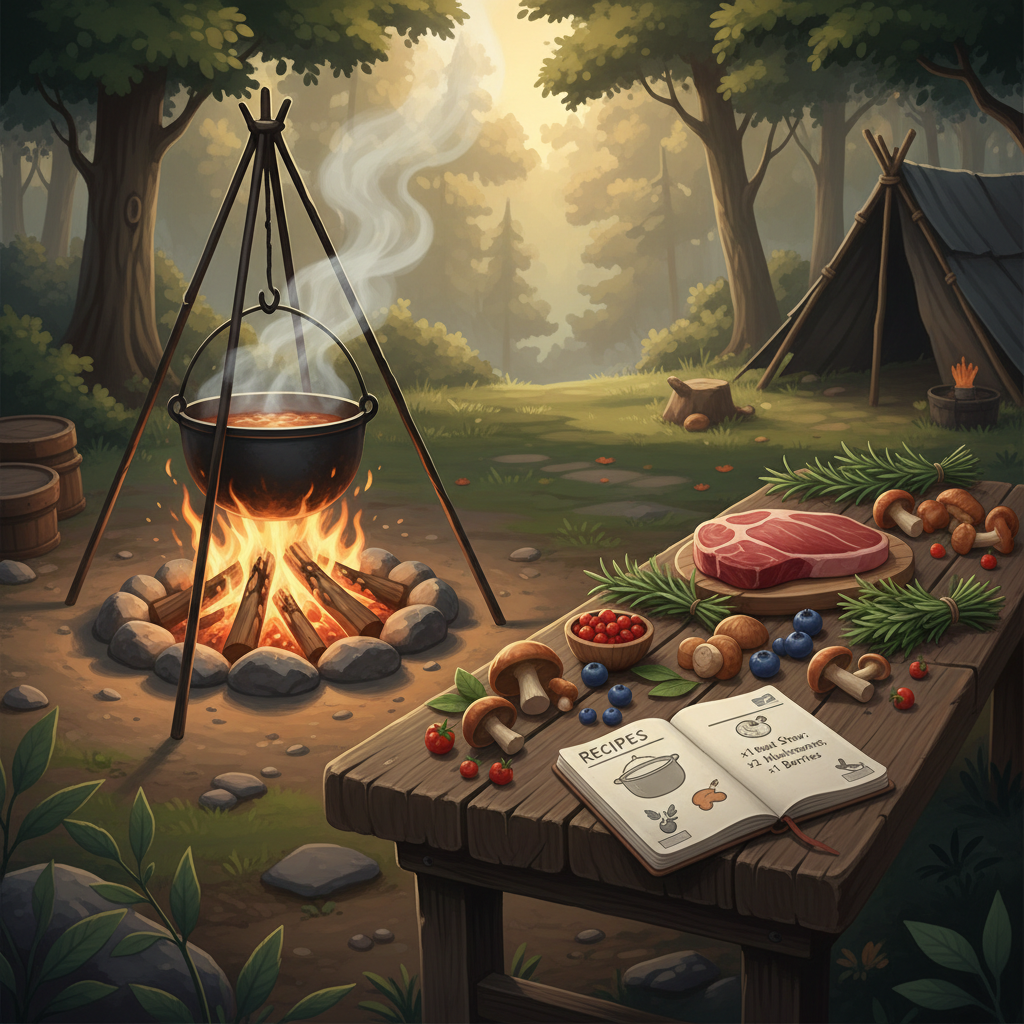
What this guide does: it gives you a practical way to judge recipes (not just list “top foods”), then a set of recipe patterns you can map onto most games, whether you’re playing something like The Long Dark, Valheim, Don’t Starve, ARK, Minecraft, or a newer extraction-survival hybrid.
What “best” means in survival-game cooking (it’s not just healing)
The best meal in your head might be “the one that heals the most.” In practice, the best food recipes in survival games are the ones that reduce friction. You want meals that are easy to restock, stable in your backpack, and strong enough to change how you play.
- Time efficiency: fewer steps, fewer stations, fewer rare drops.
- Ingredient reliability: farmable or commonly looted items beat “boss-only” parts.
- Buff value: stamina regen, max health, carry weight, cold/heat resistance, disease resistance, crafting speed.
- Spoil and storage behavior: smoked, dried, salted, canned, jammed, or otherwise preserved options often outperform “fresh” food.
- Opportunity cost: if a recipe consumes your best healing herb, it may be worse than it looks.
According to the USDA Food Safety and Inspection Service, perishable foods left in the “danger zone” (roughly 40°F–140°F) can grow bacteria quickly. Games simplify this, but the design idea matches: perishables are risky, preserved foods buy you consistency.
A quick self-check: which cooking strategy fits your playstyle?
If you pick recipes that clash with how you play, even “S-tier” meals feel useless. Use this checklist to decide what to prioritize in your crafting queue.
- You roam far from base → prioritize lightweight, long-lasting meals and travel snacks.
- You fight often → prioritize stamina + max health foods and quick-eat items.
- You play in harsh biomes → prioritize temperature resist and hydration-efficient cooking.
- You hate farming → prioritize 2–3 ingredient recipes from common loot.
- You run co-op → prioritize batch cooking and stackable foods that feed a group.
Keep one rule in mind: your “daily driver” meal should be boring. Reliable ingredients, predictable buffs, easy restock. Save complicated recipes for bosses, long raids, or deep exploration trips.
Core recipe patterns that stay strong across most survival games
Names differ by game, but the patterns repeat. If your game has any version of these, they’re usually worth learning early.
1) Balanced stew (protein + veg)
This is the workhorse. A meat plus a vegetable plus a filler (water, broth, grain) tends to give solid hunger restoration, decent healing, and sometimes warmth.
- Typical ingredients: meat/fish + mushrooms/carrots/potatoes + water
- Best use: day-to-day roaming, post-fight recovery
- Why it wins: flexible substitutions, easy to batch craft
2) Jerky / smoked meat (preserved protein)
If your game has drying racks, smokers, salt, or curing stations, use them. Preserved protein is rarely the “biggest heal,” but it’s often the most dependable food you can carry.
- Typical ingredients: meat + salt/smoke time
- Best use: long trips, emergency rations
- Watch for: thirst penalties in some games
3) High-stamina meal (grain + fat, or fish-based dishes)
Many games quietly reward stamina-focused foods more than pure healing, because stamina controls sprinting, climbing, dodging, and tool use.
- Typical ingredients: cooked fish, bread, porridge, honey-based combos
- Best use: dungeon runs, heavy gathering sessions, boss fights
4) Fast snack (berries, trail mix, simple cooked items)
Fast snacks aren’t glamorous, but they prevent the “I can’t sprint because I’m starving” spiral. Keep them for top-ups between full meals.
- Typical ingredients: berries + nuts, cooked mushrooms, simple rations
- Best use: travel pacing, early game when stations are limited
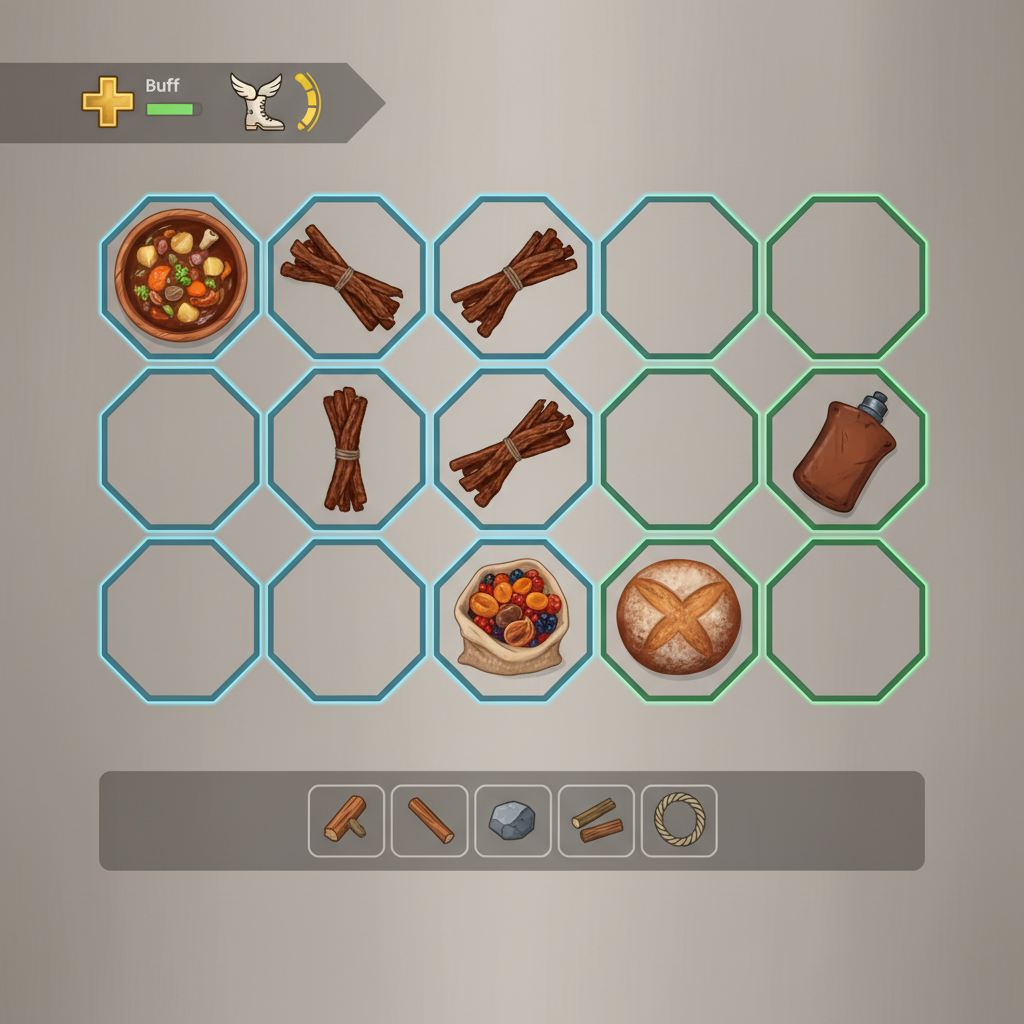
A practical “best recipes” table you can map to your game
You can treat this table as a translation layer. Find the closest equivalents in your game, then build your routine around 2–3 staples.
| Recipe type | What it usually costs | What you usually gain | When it’s “best” |
|---|---|---|---|
| Balanced stew | Common meat + common veg + water | Stable hunger, moderate healing, sometimes warmth | Everyday exploration and recovery |
| Preserved protein (jerky/smoked) | Meat + time/fuel + preservation station | Long shelf life, reliable calories | Travel days, limited storage, remote bases |
| Stamina meal | Grain/fish + seasoning/fat | Higher stamina or regen, better combat uptime | Bosses, caves, resource runs |
| Quick snack | Foraged items or simple cook | Small refill, keeps you moving | Between meals, early game |
| Temperature/resist dish | Rarer herbs/spices + a base meal | Cold/heat/toxin resistance (varies) | Harsh biomes and status-heavy areas |
How to actually build your “food loop” (so you stop wasting ingredients)
The most common failure pattern: players learn lots of recipes but don’t build a loop. A loop is just a repeatable cycle: gather → process → cook → store → restock.
- Pick one staple meal you can make from predictable inputs (your default stew or bowl).
- Pick one preserved backup for “I’m leaving base for a while” moments.
- Pick one combat meal that boosts stamina or max health.
- Define a restock trigger: for example, if you drop below 3 full meals, you stop and cook.
If your game supports it, batch-cook right after a harvest or hunt. Cooking one portion at a time is what makes food feel like a chore, and it’s usually why people end up living on low-tier snacks.
Also: stop carrying every ingredient “just in case.” Ingredients are heavy, and many spoil. Finished foods often stack better and waste less time.
Mistakes that make good recipes feel bad
When someone says, “This recipe isn’t worth it,” they’re often fighting hidden constraints rather than the recipe itself.
- Over-crafting rare meals and draining your spice/herb bottlenecks, then having nothing for the next biome.
- Ignoring buff stacking rules (some games overwrite buffs, others stack, others use “highest only”). Read the tooltip once, it saves hours.
- Cooking too early when you don’t have storage, then watching food spoil in a chest you rarely visit.
- Using healing food as combat healing when the game expects bandages, potions, or medkits to cover that role.
According to the FDA, cross-contamination and improper storage drive a lot of real-world foodborne illness. Games sometimes mirror this idea through “food poisoning” or “sickness” mechanics. If your game has that system, treat questionable food as a last resort, and if you’re unsure about health-related decisions in real life, consider asking a qualified professional.
When to look up exact recipes, and when to improvise
There’s a sweet spot between “I never open the cooking menu” and “I follow a wiki like it’s a tax form.”
- Look up exact recipes when your game has strict stations, rare spices, or multi-step chains that gate progression.
- Improvise when the cooking system uses categories (protein/veg/filler) and accepts substitutions.
A good rule: if a recipe uses an ingredient you can’t reliably replace, treat it like an event meal. Make it for a reason, not because it’s available right now.
Key takeaways (so you remember this mid-raid)
- Best food recipes in survival games are the ones you can repeat without stress, not just the biggest numbers.
- Build a 3-part kit: a staple meal, a preserved backup, and a stamina-focused “serious” dish.
- Batch cook after hunts or harvests, and carry meals, not ingredients.
- Preservation often beats fresh food once you travel farther from base.
Conclusion: pick boring staples, save fancy meals for big moments
If you want one change that usually helps immediately, pick one recipe you can craft reliably and make it your default, then add a preserved option for travel. That alone tends to reduce deaths that come from stamina dips, bad timing, or running out of food at the edge of the map.
If you’re trying to optimize beyond that, start tracking what actually blocks you: spice scarcity, fuel, spoilage, carry weight, or station access. Once you name the bottleneck, the “best” recipes become obvious for your situation.
FAQ
What are the best food recipes in survival games for early game?
Early on, “best” usually means low ingredients and low station requirements. Simple cooked meat plus a basic veg dish or stew-equivalent often beats complicated meals you can’t restock.
Is jerky always better than cooked meat?
Not always. Jerky commonly wins on shelf life and travel convenience, but some games add thirst penalties or lower immediate healing. If you mostly stay near base, fresh cooked meals can be fine.
How many meals should I carry on long trips?
A practical target is enough for one full in-game day more than you expect to be out, plus a small buffer of snacks. If your game has harsh weather or stamina-heavy traversal, bump that up.
Why do my food buffs keep disappearing?
Many systems overwrite buffs when you eat a new meal, or only keep the strongest effect. Check whether your game treats buffs as “one slot,” “per category,” or fully stackable, then plan meals around that rule.
What’s the best way to avoid food spoilage?
Use preservation mechanics when available, and avoid cooking large batches before you have storage that slows spoil. Also, don’t haul raw perishables for long distances unless the game gives you cold storage.
Should I prioritize health foods or stamina foods?
In a lot of survival titles, stamina foods quietly improve survivability more than you expect because they control movement and dodges. If you’re dying in fights, lean stamina; if you’re dying to attrition, lean balanced meals and preservation.
Do “best recipes” change in co-op?
Usually yes. Co-op rewards batch cooking and stackable foods, and you may want one player to specialize in farming or fishing while others scout. Shared storage makes preservation and meal planning more valuable.
If you’re trying to standardize your kitchen routine, or you want a short list of best food recipes in survival games tailored to the title you’re playing, it can help to share your game name and where you’re stuck, then build a simple staple-plus-travel kit around your actual bottleneck.